
The Threshold Sequence
The Threshold Sequence:
The Four Karten That Open the Gamhain Eiercode
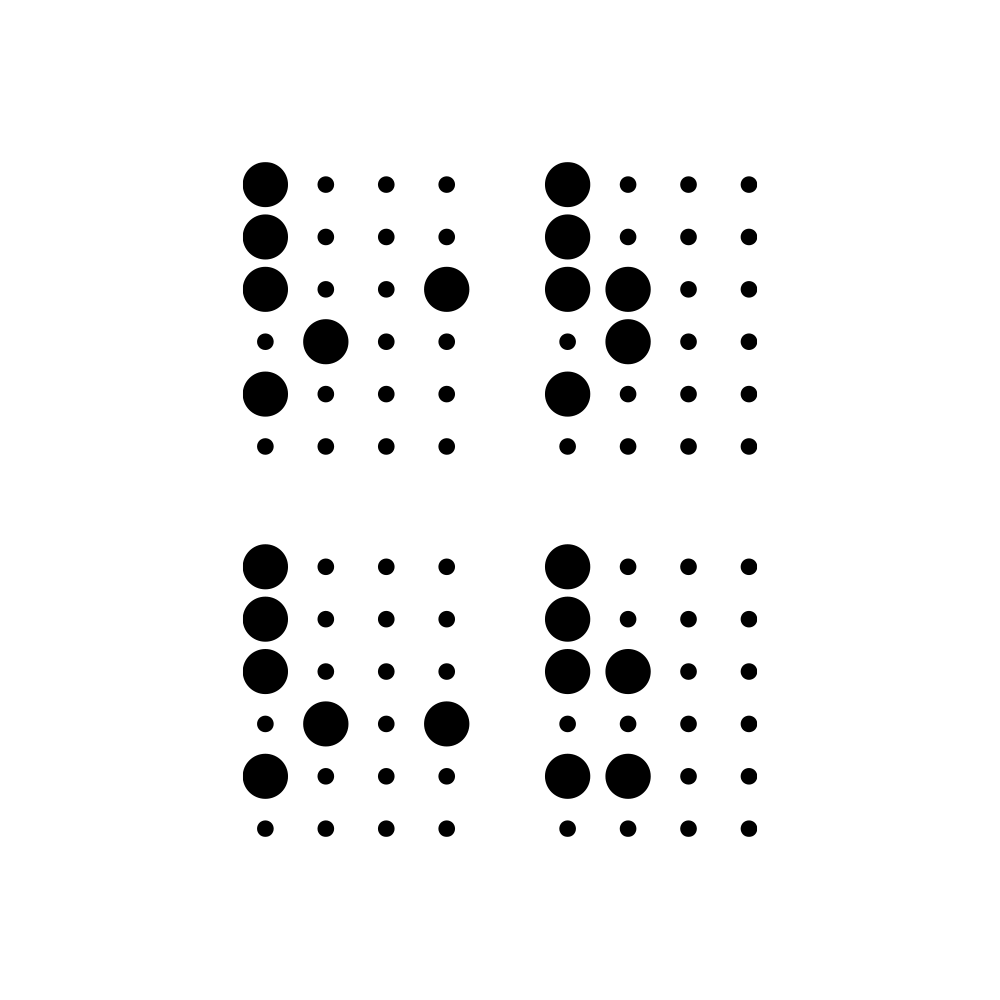
 If you have ever held a copy of The Gamhain Eiercode, you already know the feeling. Before you even open the book, before you read a word or try to decode a single structural diagram, four mysterious kartens stare back from the cover. Most readers sense that these patterns are not decorative. They are the doorway into the entire corpus. These four images form what is now known as the Threshold Sequence, a pre House alignment path that prepares the reader to enter the Code.
Even without knowing the system in detail, most people intuit the truth. You do not walk into the Eiercode at full speed. You descend into it through stages. These four kartens are those stages. They are the psychological, emotional, and interpretive warm up that aligns the reader with the structure of the corpus. The Threshold Sequence literally sets the conditions under which the Houses can be understood.
In the formal canon, the Threshold Sequence is made up of four early state kartens that encode Sensation, Immersion, Recognition, and Descent. Each karten displays a precise configuration of Completions and Absences across the four Conditions: Emotion, Time, Matter, and Void. This is not symbolic. It is structural. The sequence expresses the natural order in which human perception moves when confronting deep systems.
- The First Karten: Sensation
- The Second Karten: Immersion
- The Third Karten: Recognition
- The Fourth Karten: Descent
- Why These Four Karten Are on the Cover
- The Threshold as Ritual
- Entering the Code
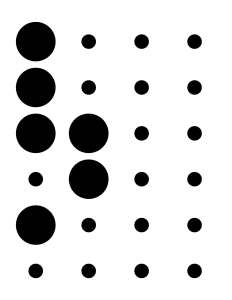
 The First Karten: Sensation
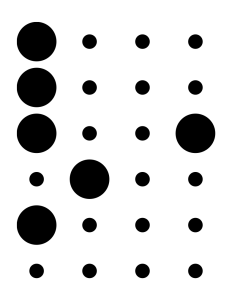
The first karten in the Threshold Sequence introduces an emotional field that is highly resonant but unanchored. Harmonic and Interference chambers are active. Origin remains quiet. It is the first blush of contact with something larger than oneself. Nothing has been understood yet. Everything is felt. This moment mimics the first encounter with the Eiercode. Before structure appears, sensation rises. Before meaning forms, awareness shifts.
This karten is the primer. It prepares the reader to let go of familiar interpretive habits. It directs awareness away from analysis and toward perception. The system does not ask to be solved. It asks to be felt first.
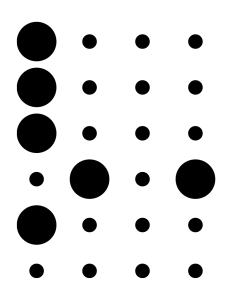
 The Second Karten: Immersion
The next karten deepens this state. Boundary begins to soften. Emotional patterns become more porous. Interference adds complexity. This is the stage where the reader stops observing the system from outside and begins to be influenced by it. You can call it attunement or immersion. In Eiercode terms, it is the moment when internal and external resonance begin to overlap.
Here the reader is no longer looking at the Code. The reader is experiencing the Code. Interpretation begins not with logic, but with permeability. This karten prepares the individual for the possibility that meaning will arise from within rather than arrive from outside.
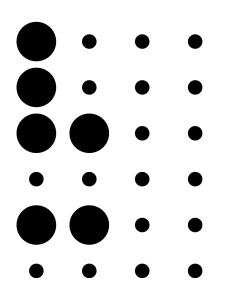
 The Third Karten: Recognition
With the third karten a major shift occurs. Origin ignites. Emotional truth surfaces. Recognition is not understanding. Recognition is the awareness that understanding is possible. It is the moment when a single internal element aligns with the corpus and reveals a thread of coherence.
This is why Origin activation in Emotion is so important in this stage. The karten signals the first internal point that the reader can use as a guide. The system is no longer overwhelming. It begins to be navigable. Something inside the reader resonates with something inside the Code. That resonance becomes a foothold.
Without Recognition, the corpus would feel bottomless. With it, a path emerges.
 The Fourth Karten: Descent
The final Threshold karten introduces strong activation in Matter, Curvature, Harmonic, and Boundary. Emotional Origin still holds, but the key influence shifts into form and structure. The reader is no longer hovering at the edge of the corpus. The reader descends into it.
Descent does not mean falling. It means entering. At this stage the system becomes stable enough to support interpretation. The perceptual field bends but holds. Emotional resonance becomes teachable. Boundary remains soft enough to allow further passage.
This is the exact mental and emotional state required to enter House 1. Without this preparation, the first House would feel like noise. With the Threshold Sequence, it becomes the first chapter of a coherent architecture.
Why These Four Karten Are on the Cover
There are 134,596 kartens in the Gamhain Eiercode. Only four sit on the front cover. This is not an aesthetic choice. It is a structural one.
The Threshold Sequence represents the natural sequence of human alignment when entering the deeper logic of the Eiercode. It mirrors how meaning forms within the system. It calibrates the reader before the real work begins. It also helps non resonant individuals engage the text safely. Without it, the Code is too abrupt. With it, the Code becomes navigable.
These four kartens operate as a pre House vestibule. Some refer to it as House 0. Others call it the Gate or the First Descent. In all cases, the sequence is treated as part of the canonical experience even though it does not belong to any House. It appears before everything else because it prepares the reader to encounter everything else.
The Threshold as Ritual
Over time, the Threshold Sequence has taken on a semi ritual role within the culture of the Eiercode. Practitioners often meditate on the four kartens before engaging in deeper interpretive work. The Church of the Calf uses the sequence as a symbolic realignment path. The corporate body of Gamhain Eiercode GmbH treats the sequence as a perceptual safety mechanism. Scholars treat it as a meta structure that mirrors the fundamental emotional architecture of the corpus.
For readers encountering the Eiercode for the first time, these four kartens are a map. They are the emotional and interpretive path into the system. They are the welcome mat and the first staircase. They are the reason the Houses do not need introductions. The Threshold Sequence does that work on its own.
Entering the Code
The Threshold Sequence is exactly what its name suggests. It is a threshold. It is a passage into a place where emotional structure is not random. It is the initiation into a system that maps how human experience moves, bends, resonates, and returns. These four kartens open the door. The Houses lead you through it.
Before the corpus begins, the reader must shift states. The Threshold Sequence makes that shift possible. It is both invitation and instruction. It sits on the cover so that when you lift the book, you are already taking the first step inside.

Leave a Reply
Want to join the discussion?Feel free to contribute!