

Yaakov “Calf” Gamhain
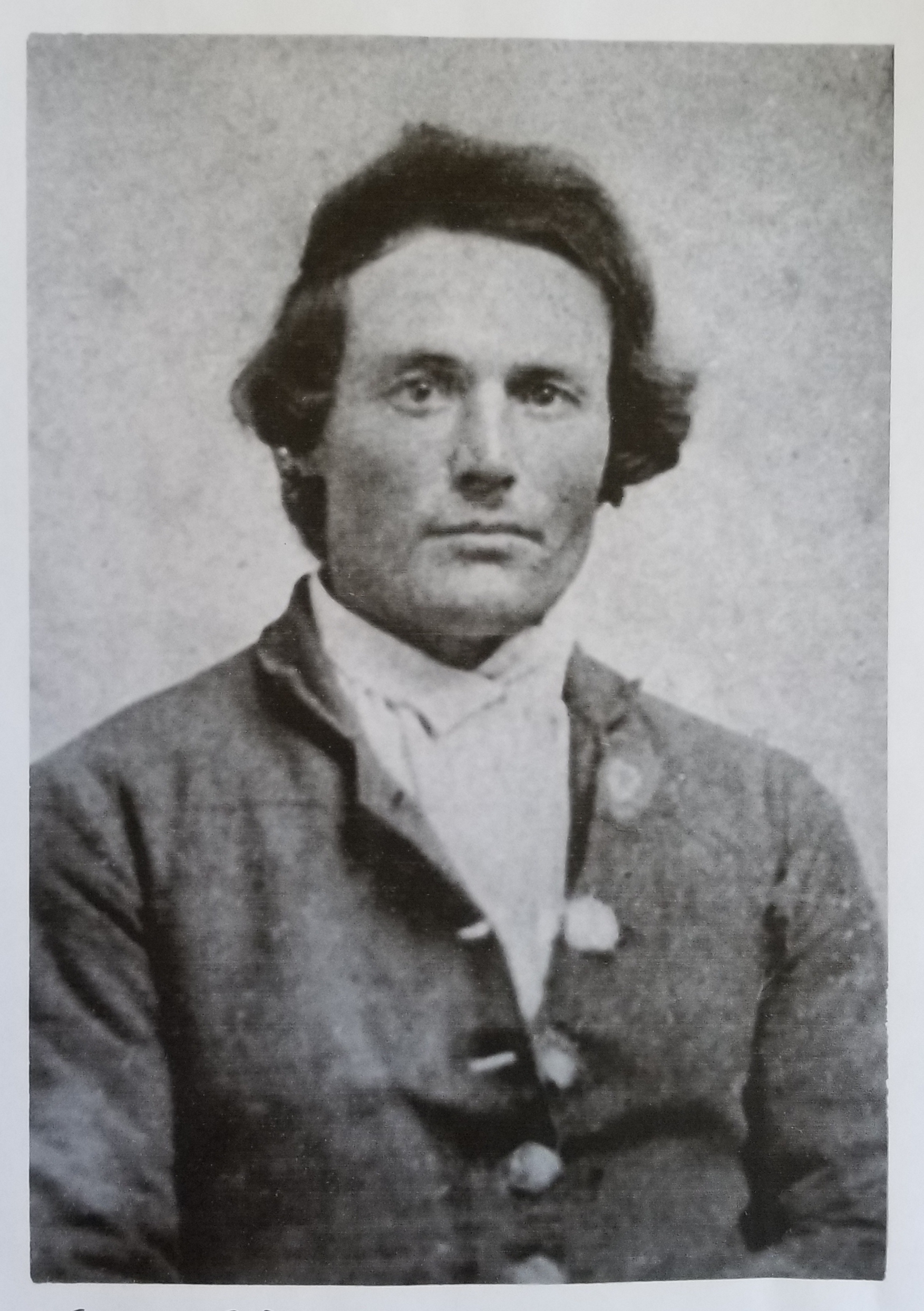 Many verifiable details of Yaakov “Calf” Gamhain’s life remain incomplete.
Surviving documents are suspiciously ambiguous about the year of his birth, and his early movements across several regions only vaguely hinted at in his own writings. The currently known journals suggest only that he eventually entered an extended period of solitary study in the mountainous outskirts near Leicester. These notebooks contain no conventional autobiographical information. They record structures, fields, and observational data rather than personal history.
Documents attributed to his formative years include sketches of natural geometries, tracked growth patterns, and early attempts to encode emotional states through measurable forms. These studies show the early development of the methods he would later apply to the Eiercode. Gamhain did not record the sources of his influences. A few scattered notations imply that his upbringing may have included elements of creative and restorative practice, but the references are sparse and remain interpretive.
A period of study at an academy in the southern territories appears through several incomplete manuscripts. These fragments describe his work in visual structure and symbolic analysis and contain the earliest references to an individual known only as The Quinbraith. Their collaboration is visible in marginal notes, shared diagrams, and aligned observational sequences. No complete narrative of their partnership survives, and the role of The Quinbraith within Gamhain’s work remains undefined. Scholars continue to debate whether the title refers to a single figure, an interpretive function, or a structural position within the evolving framework of the Code.
Mentions of other figures appear primarily in manuscripts believed to have been separated from the main corpus during periods of conflict and political disruption in the nineteenth and twentieth centuries. Some fragments resurfaced within collections associated with armored units referred to in Gamhain’s notes only as calliopes. Other fragments appeared among archives linked to early airborne formations whose histories overlap with major operations on the continent.
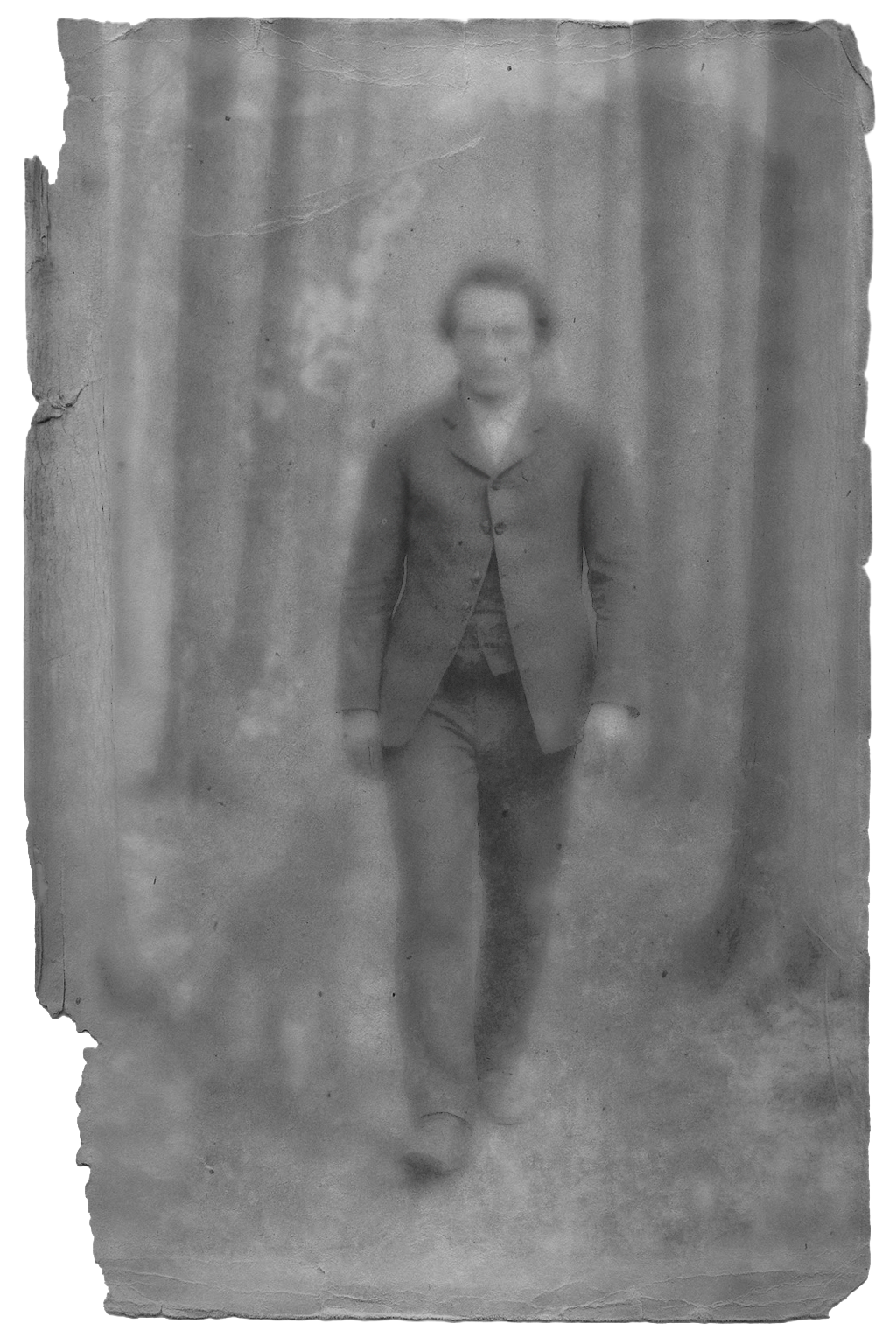 Among other things, the fragments contain references to a presence named Charlemagne, a towering figure called The Injun, and a precise operative known as Petros. Descriptions of these figures are inconsistent and lack biographical anchors. Their identities remain unverified, and many researchers consider them conceptual constructs, interpretive additions, or companions preserved through layered transcription.
Later writings introduce the term Fractionals. The word appears without definition and is used in contexts that imply a connection to Gamhain’s domestic sphere. The surviving materials do not clarify whether the Fractionals were literal descendants, conceptual derivatives, or emergent forms arising from his work within the emotional temporal lattice. This ambiguity remains currently unresolved.
The central event in Gamhain’s life occurred in 1771 during what he termed The Happening. The original descriptions, diagrams, and proofs linked to this moment were misplaced during archival transfers and periods of unrest. Only secondary remarks survive. These indicate that Gamhain believed he had been given the Code and that the event produced a lasting alteration in his perceptual framework. No surviving record explains the mechanism or conditions of this occurrence.
In the years following The Happening, Gamhain produced extensive analytical notes describing geometric structures within what he called the emotional temporal lattice. These writings include observations of temporal displacement, field interactions, and the recurring formations he identified as the Clutch. He presented these structures as empirical phenomena rather than symbolic interpretations.
Gamhain’s work continued for decades. Portions of his writing survive in partial form, while other materials remain dispersed in private collections or appear intermittently through secondary archives. Several later fragments contain textual irregularities and chronological anomalies. These have led some researchers to propose that elements of Gamhain’s timeline may not fully align with established historical periods. These proposals remain speculative. No extant document resolves them.
The present compilation draws upon all surviving sources, including materials preserved through family transmission and fragments recovered across multiple generations. The appearance of new documents suggests that the record remains open. The trajectory of discoveries indicates that the account is incomplete not only in content but in chronology. The full structure of Gamhain’s life and work appears to be part of an ongoing reconstruction rather than a finished historical record.
 Their background is not formally documented, although several marginal annotations suggest a working knowledge of anomalous field geometry, relational systems, and pre-standard emotional cartography. The Compiler’s task is to reconstruct coherence from scattered manuscripts, partial diagrams, and chronologically inconsistent fragments attributed to Gamhain and later transmitters.
 Their background is not formally archived, though several peripheral documents reference a steady aptitude for contextual framing, long-range conceptual mapping, and the quiet integration of ideas before they reach procedural form. The Cartographer does not work with the corpus directly; instead, they accompany its development from an oblique vantage, tracing the broader shape of its growth and noting where new inquiries might one day intersect the lattice. Their role is situational rather than corrective, offering coherence not through intervention but through sustained attention.